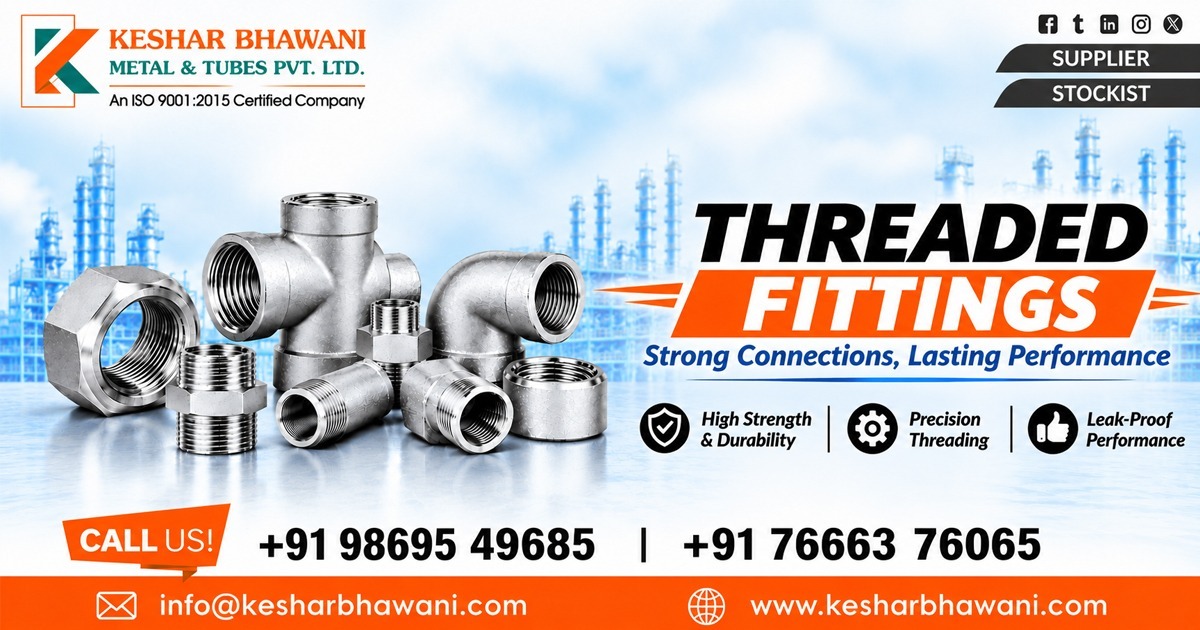
Threaded connections play a practical role in industrial piping where removable joints, straightforward assembly, and maintenance access are required. Threaded Pipe Fittings for Industrial Piping Connections help connect pipe sections, equipment, and flow lines across industrial facilities in Mumbai.
How Threaded Connections Fit Into Industrial Piping Layouts
Threaded pipe fittings are components used to join pipes, change flow direction, connect different pipe sizes, or provide branch connections without requiring welded joints at every connection point.
Common fitting types include:
- Elbows: Change the direction of a pipeline, commonly through 45-degree or 90-degree configurations.
- Tees: Create branch connections from a main pipeline.
- Reducers: Connect pipes with different diameters.
- Sockets and couplings: Join two compatible threaded pipe ends.
- Unions: Allow sections of a pipeline to be disconnected for maintenance.
- Plugs and caps: Close unused threaded openings or pipe ends.
- Nipples: Connect fittings, valves, or equipment through short threaded pipe sections.
The fitting configuration should match the pipeline drawing, connection arrangement, and operating requirements.
Selecting the Correct Thread Type Before Procurement
Thread compatibility is one of the first points buyers should verify. Two fittings may appear similar but still be unsuitable for connection if their thread profiles or dimensions differ.
Before placing an order, check:
- Thread standard: Confirm whether the requirement is BSP, NPT, or another specified thread type.
- Male or female connection: Identify the external and internal thread arrangement.
- Thread size: Match the nominal pipe size and specified thread dimensions.
- Thread condition: Check for damaged, incomplete, or poorly finished threads.
- Sealing arrangement: Determine whether the joint requires a compatible thread sealant, sealing tape, gasket, or another approved method.
Avoid assuming that BSP and NPT threads are interchangeable. Their thread geometry differs, and an unsuitable combination can cause leakage or connection problems.
Material Selection for Different Operating Environments
| Material option | Important consideration |
| Stainless steel | Consider for corrosion resistance and demanding industrial environments, subject to grade and fluid compatibility |
| Carbon steel | Often considered for general industrial piping where corrosion protection is addressed |
| Alloy steel | May be specified for particular mechanical and operating conditions |
| Brass | Used in suitable applications where its compatibility with the fluid and operating conditions is established |
For stainless steel fittings, buyers should identify the required grade rather than ordering only by the general material description.
Where These Fittings Are Used Across Industrial Facilities
Threaded joints are generally selected for piping sections where the design permits screwed connections and the operating conditions are suitable.
Typical application areas include:
- Chemical processing: Utility lines and compatible fluid-handling connections.
- Water treatment plants: Selected water distribution and service piping.
- Oil and refinery facilities: Suitable auxiliary and utility piping arrangements.
- Food and beverage plants: Compatible service lines and equipment connections.
- Pharmaceutical facilities: Selected utility connections based on hygiene and material requirements.
- Sugar and paper mills: General plant utility and maintenance piping.
- Engineering workshops: Equipment connections and fabricated piping assemblies.
How to Assemble a Threaded Pipe Joint Correctly
A threaded connection depends on matching threads, proper engagement, and a suitable sealing arrangement. Incorrect assembly can result in leakage, damaged threads, or difficulty during future maintenance.
A general installation sequence involves:
- Check the components: Confirm fitting size, thread type, material, and connection condition.
- Inspect the threads: Ensure that the male and female threads are clean and free from visible damage.
- Prepare the sealing arrangement: Use a compatible sealant or sealing method specified for the application.
- Make the connection: Engage the threads carefully and tighten using the approved installation method.
- Inspect the assembled joint: Check alignment and confirm that the connection has no visible damage.
- Conduct the required testing: Perform the specified leak or pressure test under an approved procedure before putting the line into service.
Avoid excessive tightening because it can damage threads or cause fitting failure. Installation torque and sealing requirements should follow the applicable manufacturer instructions and piping specifications.
Preventing Leakage, Thread Damage and Unplanned Maintenance
Threaded joints can develop problems when the wrong fitting, sealing material, or installation method is used. Routine inspection helps identify developing issues before they affect connected equipment or operations.
| Common Issue | Possible Cause | Practical Check |
| Leakage at connection | Incorrect thread compatibility or sealing | Verify thread type and sealing arrangement |
| Difficult assembly | Mismatched thread dimensions | Check fitting and pipe specifications |
| Damaged threads | Cross-threading or excessive tightening | Inspect components and replace damaged fittings |
| Corrosion around joints | Material incompatibility or environmental exposure | Review material selection and corrosion protection |
| Loose connection | Vibration or unsuitable assembly | Check the joint according to maintenance procedures |
| Repeated leakage | Incorrect fitting selection or installation | Review the complete connection design |
Routine maintenance should include:
- Checking accessible joints for leakage or corrosion.
- Inspecting exposed fittings for physical damage.
- Reviewing connections near vibrating equipment.
- Replacing damaged components instead of forcing them back into service.
- Keeping compatible replacement fittings and sealing materials available.
Inspection frequency should depend on operating conditions and the plant maintenance schedule.
Procurement Checks That Prevent Incorrect Fitting Orders
A small mismatch in fitting specifications can create installation delays, replacement costs, and piping modifications. Procurement teams should provide complete technical details rather than ordering only by nominal size.
Use this checklist before confirming an order:
- Required fitting type and configuration.
- Nominal pipe size and connection dimensions.
- Thread standard and male/female arrangement.
- Required material grade.
- Pressure and temperature conditions.
- Fluid composition and corrosion considerations.
- Applicable project specifications and standards.
- Quantity and packaging requirements.
- Material test certificates or inspection documents, where required.
- Expected delivery schedule and replacement availability.
One common purchasing mistake is specifying a fitting only as a stainless steel threaded elbow without confirming its grade, thread type, size, and operating conditions.
For project procurement, a drawing, material specification, or sample reference can help reduce misunderstandings between the buyer and supplier.
Product Coordination and Industrial Support From Keshar Bhawani Metal & Tubes
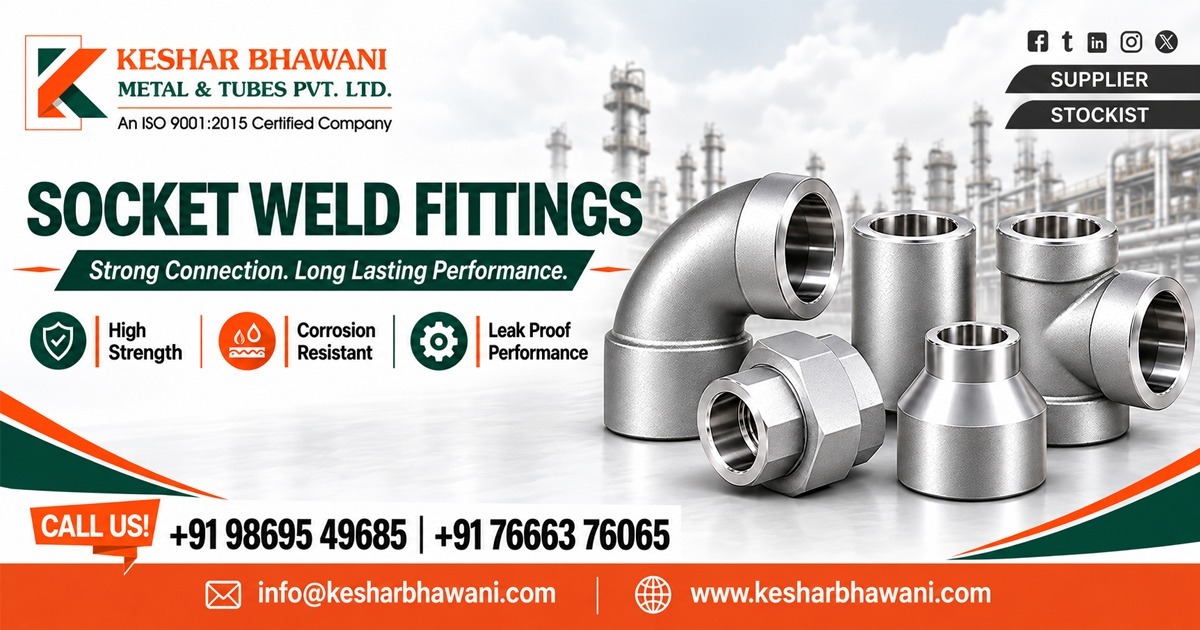
Keshar Bhawani Metal & Tubes Pvt. Ltd. includes threaded fittings within its manufacturing-material product range, alongside butt weld fittings, socket weld fittings, industrial flanges, and industrial valves.
For industrial buyers, discussing the complete piping requirement can help establish the correct product configuration and procurement details.
Relevant areas of coordination include:
- Identifying the required threaded fitting type and connection arrangement.
- Reviewing material, size, and thread specifications.
- Coordinating fitting requirements with associated piping materials.
- Discussing project documentation and delivery requirements.
Visit the official website, kesharbhawani.com, to explore the company’s industrial product range and contact information.
The supplied company information identifies its manufacturing unit in Mumbai, Maharashtra, India.
Services
- Threaded fitting requirement assessment and product consultation.
- Material, thread type, and dimensional selection guidance.
- Industrial piping material coordination and procurement support.
- Product documentation and order-related assistance.
Location
Industrial piping requirements across Maharashtra create demand for compatible fittings in manufacturing plants, engineering facilities, infrastructure projects, and processing units. Keshar Bhawani Metal & Tubes Pvt. Ltd. provides Mumbai-based manufacturing support for buyers across Mumbai, Navi Mumbai, Thane, Pune, Pimpri-Chinchwad, Nashik, Nagpur, Chhatrapati Sambhajinagar, Kolhapur, Sangli, Satara, Solapur, Ahilyanagar, Jalgaon, Dhule, Amravati, Akola, Wardha, Ratnagiri, Raigad, Taloja, Tarapur-Boisar, Chakan, Ranjangaon, and the TTC Industrial Area.
Frequently Asked Questions
Q: Which thread types should buyers check before ordering industrial fittings?
A: BSP and NPT are commonly specified thread types. Buyers should verify the exact thread profile, size, and connection arrangement to prevent compatibility problems.
Q: Can threaded fittings be used in high-pressure piping systems?
A: Their suitability depends on fitting design, material, pressure class, temperature, and applicable piping codes. Always verify the engineering specifications before selection.
Q: How can buyers identify the correct stainless steel threaded fitting?
A: Check the stainless steel grade, fluid compatibility, thread type, dimensions, and operating environment. Material documentation should also be reviewed where required.
Q: What information should be shared when requesting a threaded fitting quotation?
A: Provide fitting type, size, material grade, thread specification, quantity, pressure requirements, and relevant technical drawings to support accurate order evaluation.
Conclusion
Reliable threaded connections depend on correct dimensions, compatible materials, and proper installation. Threaded Pipe Fittings for Industrial Piping Connections should be selected according to actual operating conditions and project specifications. Mumbai-based support from Keshar Bhawani Metal & Tubes helps industrial buyers coordinate their piping material requirements.
Discuss your industrial piping requirements with Keshar Bhawani Metal & Tubes Pvt. Ltd. for product consultation, fitting selection, and procurement assistance.
Contact Number: +91 98695 49685 +91 93200 49685
Email Id: info@kesharbhawani.com